Churches across the Diocese of Bath and Wells spent around £1 million on energy last year - a striking reminder of why understanding and managing energy use is so important.
Using last year’s Energy Footprint Tool data, the diocesan Environment Team has produced a new infographic showing what the data tells us about church energy use, carbon emissions, progress towards Net Zero Carbon, and opportunities for future support.
The diocesan-wide infographic highlights a 65% EFT completion rate, an estimated church-building carbon footprint of 2,400 tonnes CO₂e, and more than £2 million of Net Zero projects already underway or in early development. It also shows that most church-building emissions continue to come from gas, oil and electricity use - meaning there are significant opportunities to reduce both carbon emissions and running costs.
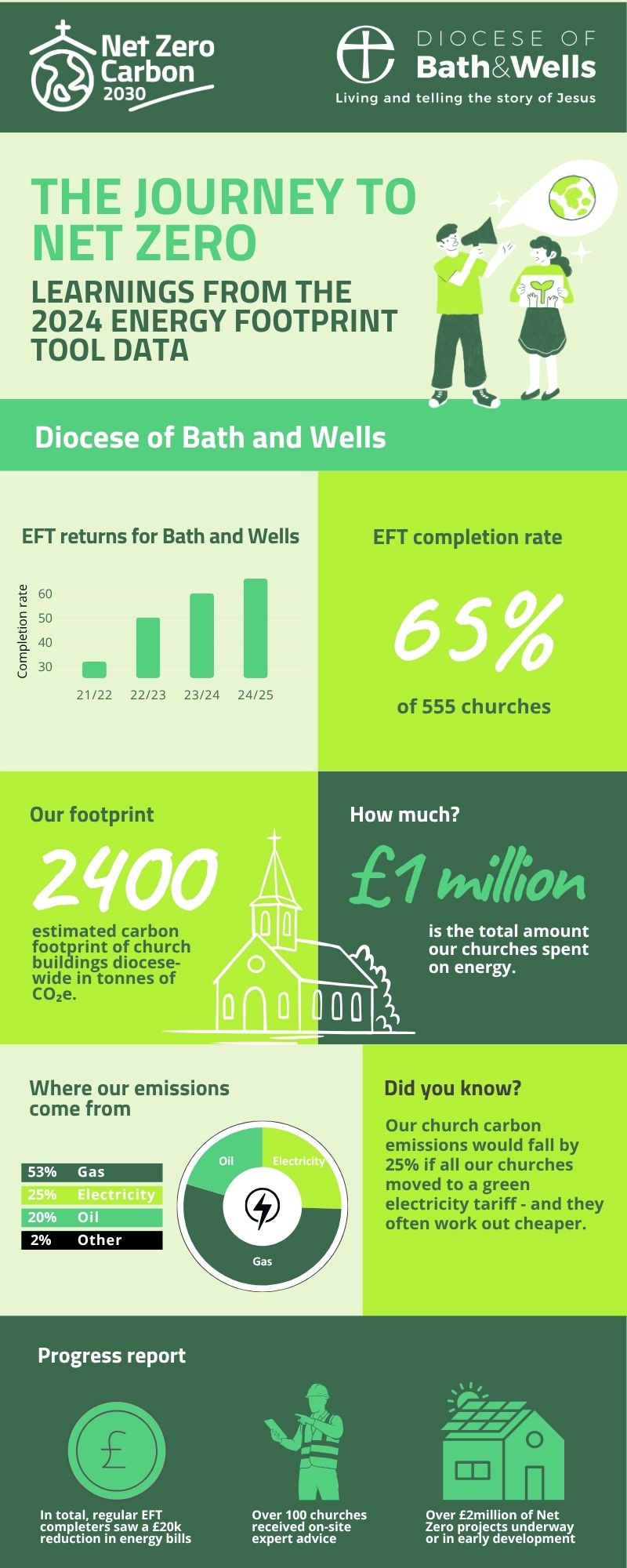
Every deanery will soon receive its own version of the infographic. These are being distributed to Area Deans this week to show what we do with the data churches provide, and how it helps us identify where support, advice and funding can make the biggest difference locally.
The Energy Footprint Tool is not just a reporting exercise. It helps the Diocese build an accurate picture of church energy use, target practical support, unlock funding opportunities, and help churches take greater control of their energy bills and carbon emissions.
In a volatile energy market, getting ahead of the curve matters. Completing this year’s EFT is one of the simplest and most important steps your church can take.
Please complete this year’s Energy Footprint Tool here and find a 'how to' here: Energy Footprint Tool - Bath and Wells Diocese
For support with reducing your church’s energy bills or carbon emissions, contact our Net Zero Project Lead and DAC Heating Advisor: dan.wills@bathwells.anglican.org