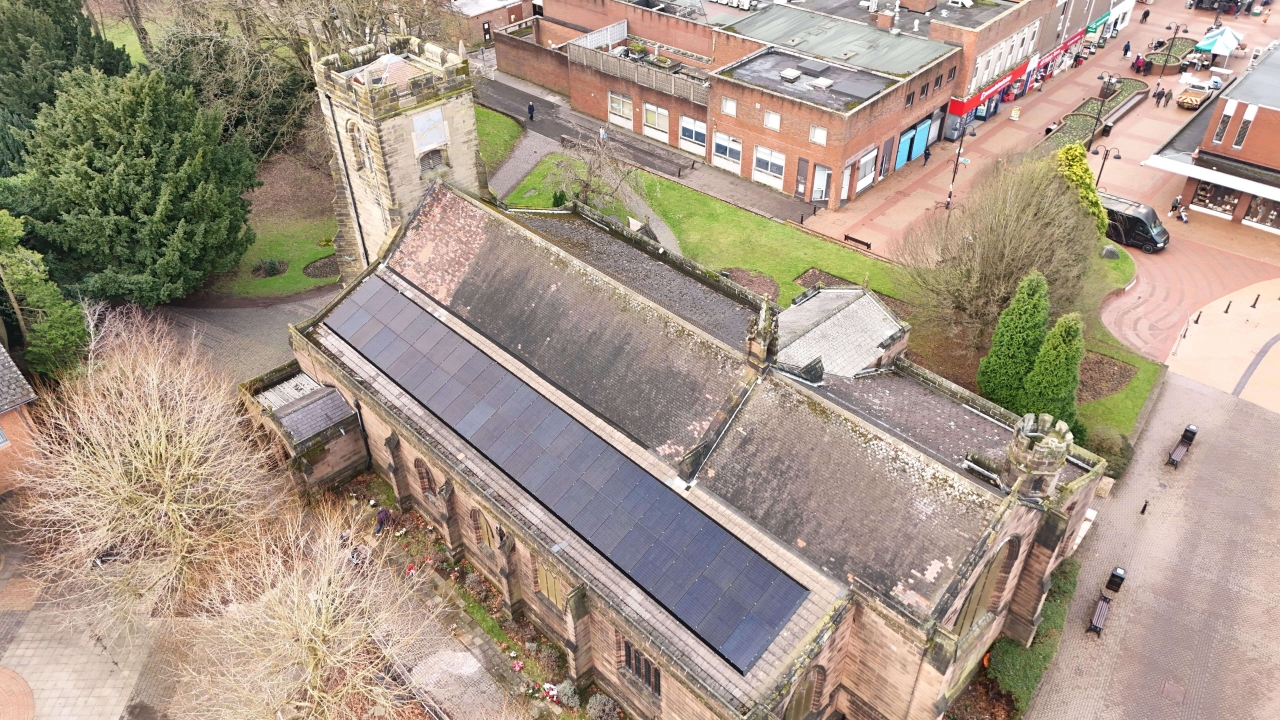
What if our churches and schools could not only use energy, but generate it for the benefit of their communities? Community energy offers a powerful way to produce clean, local electricity, reduce costs, and support those around us. We are exploring how we can unlock this potential across Bath and Wells - creating a model that works for our buildings, our communities, and our shared journey to Net Zero Carbon.
What is community energy?
Community energy describes locally led projects that generate clean, renewable electricity, reduce energy costs, or provide other energy-related services, with the benefits flowing back to the local community rather than to corporations and distant shareholders.
Projects are typically developed and owned by a group of local people through a Cooperative or Community Benefit Society (CBS). That means the people who live and work in an area can have a real stake in what gets built, how it is run, and what happens to any income generated.
Community energy is a growing movement - there are now more than 500 community energy organisations across the UK, with nearly 400 Mega Watts of community-owned capacity installed. Government investment and new funding programmes are expected to accelerate that growth significantly in the years ahead.
What are the benefits?
Strengthening communities
There is something distinctive about energy that is owned and run by local people. It builds trust, creates connection, and gives communities a tangible stake in the shift to clean energy. Community energy projects are proven to strengthen social cohesion and deepen relationships between organisations and the people they serve.
Reducing electricity costs
Community energy projects can reduce those costs, either by generating electricity on-site or by enabling local people, services and businesses to buy clean energy at below-market rates. Savings can then be reinvested in the building, the community, or other mission priorities.
Creating community benefit funds
Many community energy projects generate a surplus, which is directed into a local Community Benefit Fund. These funds can support a wide range of local needs, from helping households in fuel poverty to funding environmental projects, community spaces, or skills training. The community members decide how the money is used.
Cutting carbon
Renewable energy generated locally replaces electricity from the grid, which still relies on fossil fuel at times of peak consumption. A single well-sited solar installation can save hundreds of tonnes of carbon dioxide every year. For the Church of England, which has committed to reaching net zero by 2030, community energy could be one of the most practical and impactful tools available.
Supporting nature
Community energy projects often go hand in hand with biodiversity protection and improvement. Ground-mounted solar sites, for example, can be designed and managed to support wildflower habitats, pollinators, and other wildlife, delivering environmental benefits well beyond the energy generated.
Where does the Church come in?
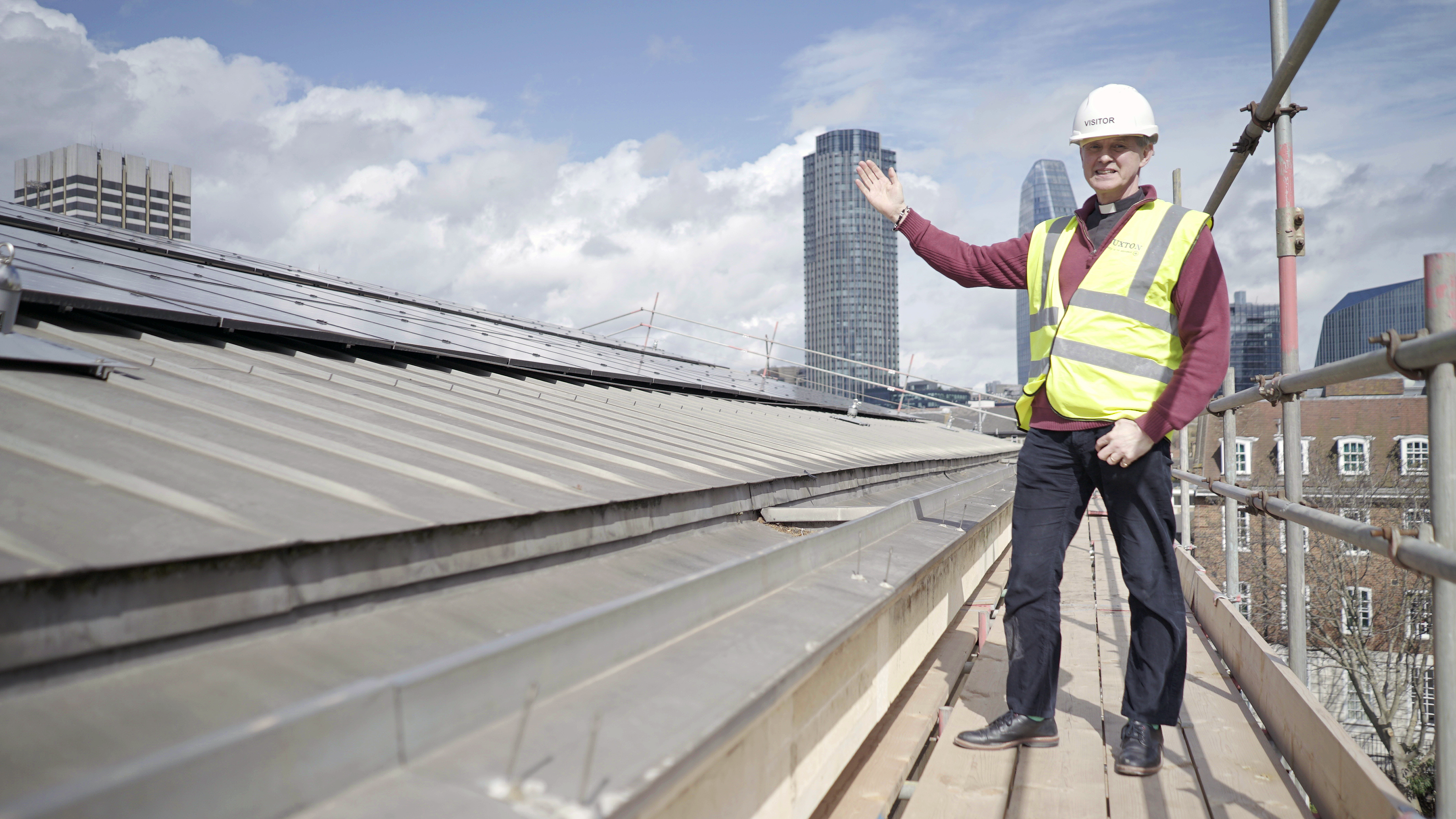
Across England, the Dioceses of the Church of England stewards thousands of buildings, schools, and parcels of glebe land. Much of this is well-suited to solar panels, battery storage, or other renewable technologies.
It’s not just about the physical assets. The Church is embedded in communities in a way that few other institutions are. It has local knowledge, trusted relationships, and a presence in places, including rural and deprived areas, where other community energy projects often struggle to get started.
The Diocese of Bath and Wells is working with Pure Leapfrog - a sustainability charity - to explore how a community energy model could work across Church properties. The project is a feasibility study rather than a construction project at this stage. We are asking the practical questions: which buildings and sites are suitable, what governance arrangements would work within the Church's existing structures, and what would a fair and workable ownership model look like?
The aim is to develop a clear, replicable blueprint that parishes and dioceses can use to get projects off the ground. If it works here, the model could be adapted and used by other dioceses across the country.
Who to contact
Contact our Environment team to find out more about community energy