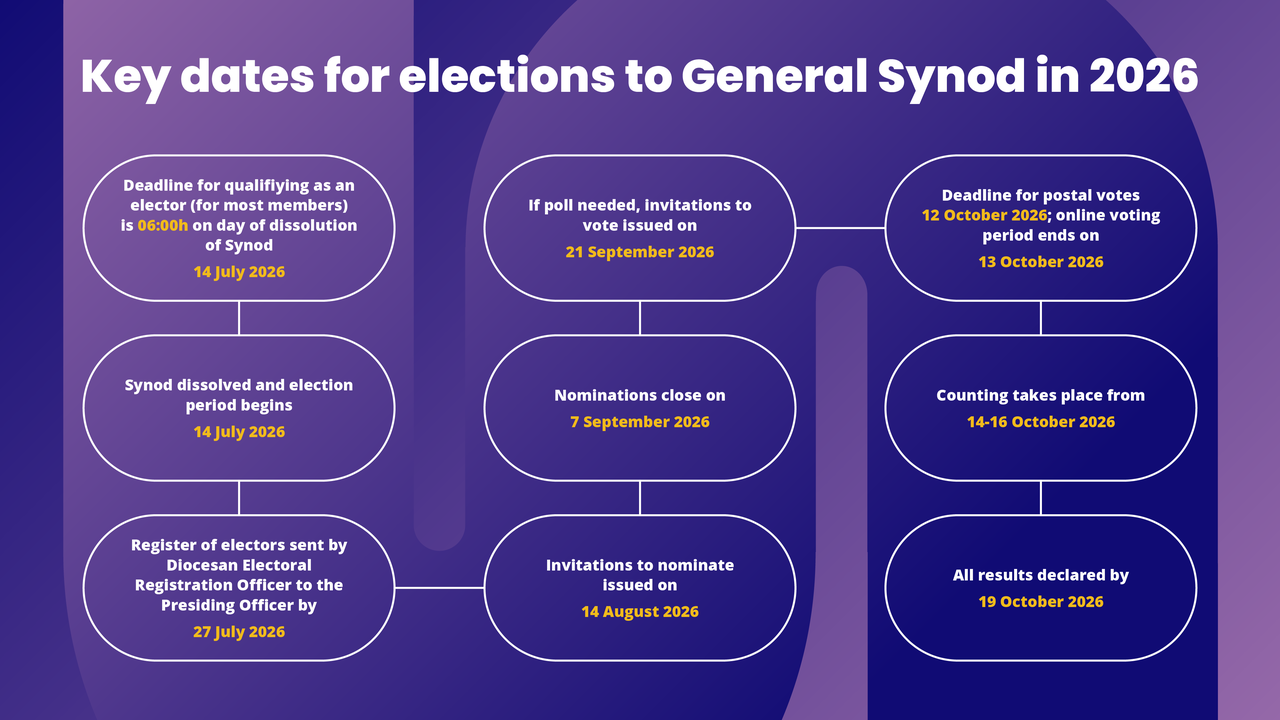
In Autumn this year, elections are taking place to elect new General Synod members and you are invited to stand.
General Synod is the Church of England’s national assembly, bringing together bishops, clergy and laity from across the country to make decisions about the Church's life and work. It approves legislation, shapes national policy, authorises new forms of worship and agrees the annual budget. Members are a mixture of bishops, clergy and lay people.
This video explains all about General Synod and how it works. More information about the role of General Synod is available on the Church of England’s website.
In the Diocese of Bath and Wells we have 4 members of clergy and 5 members of laity. General Synod members represent the whole range of people and churches in the Church of England.
Why stand as member of General Synod?
- Ensure the voice of your diocese and community is represented.
- Help shape the future decision making of the Church of England.
- Help keep the people in our diocese up to date with decisions made at a national level.
Some of the key topics that have been debated, amended and approved by General Synod in the past five years include:
- changes to the Church’s safeguarding structure
- agreement of key milestones for how the Church can reach Net Zero Carbon
- regulations enabling improvements to clergy pensions benefits
- establishing a day of prayer for the global persecuted church
- modernising how Church funds are ethically invested and enhancing accountability in financial stewardship
Who can stand as a lay member of the General Synod?
Almost anyone who attends a Church of England church regularly is eligible to stand as a candidate for the General Synod. You do not need to be a member of your deanery synod or diocesan synod to stand as a candidate. You need to be aged 18 or over, confirmed, on the electoral roll and have taken communion at least three times in the past year. The Church of England website has a quick eligibility checker as well as more in-depth information about eligibility to stand.
What does a General Synod member do?
- They represent the concerns of their community and their diocese at a national level.
- Members speak in debates, propose and vote on motions, serve on committees and review legislation.
- They have a say in national legislation that affects all parts of the Church of England.
- Can raise issues and contribute to debates on social and policy matters.
- Are involved in the national governance of the Church.